
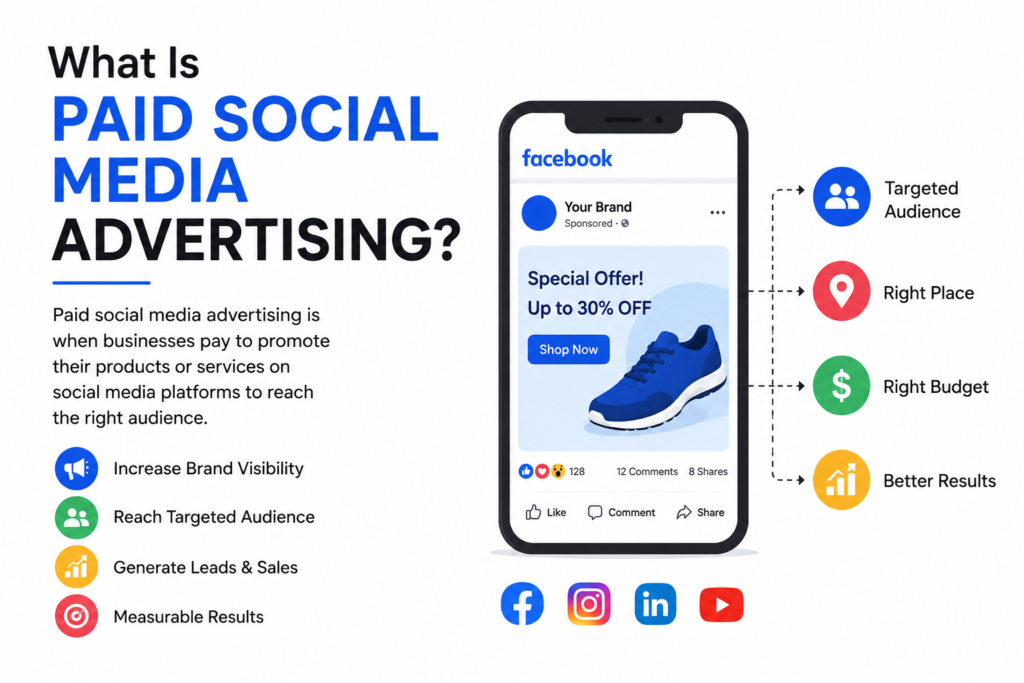
What Is Paid Social Media Advertising?
Paid social media advertising involves promoting your products, services, or content through sponsored ads on social media platforms. Unlike organic posts, paid ads allow businesses to target specific audiences based on demographics, interests, behaviors, locations, and online activities. These advertisements appear in users’ feeds, stories, videos, and other placements, helping businesses reach potential customers beyond their existing followers. Why Is Paid Advertising Important? Social media algorithms often limit the organic reach of business content. Paid advertising helps overcome these limitations by placing your message directly in front of your target audience. Some key benefits include: Increased brand visibility Faster lead generation Improved website traffic Better audience targeting Higher conversion rates Measurable marketing results Enhanced customer engagement Popular Social Media Advertising Platforms Facebook Ads Facebook remains one of the most popular advertising platforms due to its extensive targeting capabilities. Businesses can create campaigns focused on brand awareness, traffic, lead generation, app installs, and sales. Instagram Ads Instagram is ideal for visually appealing products and services. Businesses can use image ads, video ads, carousel ads, reels, and story ads to engage potential customers. LinkedIn Ads LinkedIn advertising works best for B2B companies looking to reach professionals, decision-makers, and business owners. It is particularly effective for lead generation and professional networking. X (Twitter) Ads X Ads help businesses promote tweets, trends, and accounts to increase visibility and engagement among targeted audiences. YouTube Ads Video advertising on YouTube enables brands to reach users through engaging video content before, during, or after video playback. How Targeted Advertising Works One of the biggest advantages of paid advertising is advanced audience targeting. Businesses can target users based on: Demographics Age Gender Education Occupation Income level Geographic Location Businesses can display ads to people in specific cities, states, or countries, making local advertising highly effective. Interests and Behaviors Platforms collect data about user interests, hobbies, and online activities, allowing advertisers to reach highly relevant audiences. Custom Audiences Businesses can upload customer lists, target website visitors, or create audiences based on previous interactions. Lookalike Audiences Advertisers can find new users who share similar characteristics with their existing customers. Types of Social Media Ads Image Ads Simple yet effective ads featuring high-quality visuals and compelling copy. Video Ads Video content often generates higher engagement and can effectively showcase products or services. Carousel Ads These ads allow businesses to display multiple images or products within a single advertisement. Story Ads Full-screen vertical ads that appear between user stories on platforms like Instagram and Facebook. Lead Generation Ads Designed specifically to collect customer information directly through the platform. Best Practices for Successful Social Media Advertising Define Clear Goals Determine whether your objective is brand awareness, traffic, lead generation, or sales before launching a campaign. Know Your Audience Research your target audience thoroughly to create highly relevant ads. Use High-Quality Visuals Professional images and videos can significantly improve ad performance. Write Compelling Ad Copy Focus on the customer’s needs and include a strong call-to-action (CTA). Monitor and Optimize Track campaign performance regularly and make adjustments to improve results. A/B Test Ads Test different headlines, images, audiences, and CTAs to identify what performs best. Measuring Advertising Success Businesses should monitor key performance indicators (KPIs), including: Reach Impressions Click-Through Rate (CTR) Cost Per Click (CPC) Conversion Rate Return on Ad Spend (ROAS) Lead Generation Metrics These metrics help evaluate campaign effectiveness and guide future optimization efforts.