Author name: talarigayathri02@gmail.com

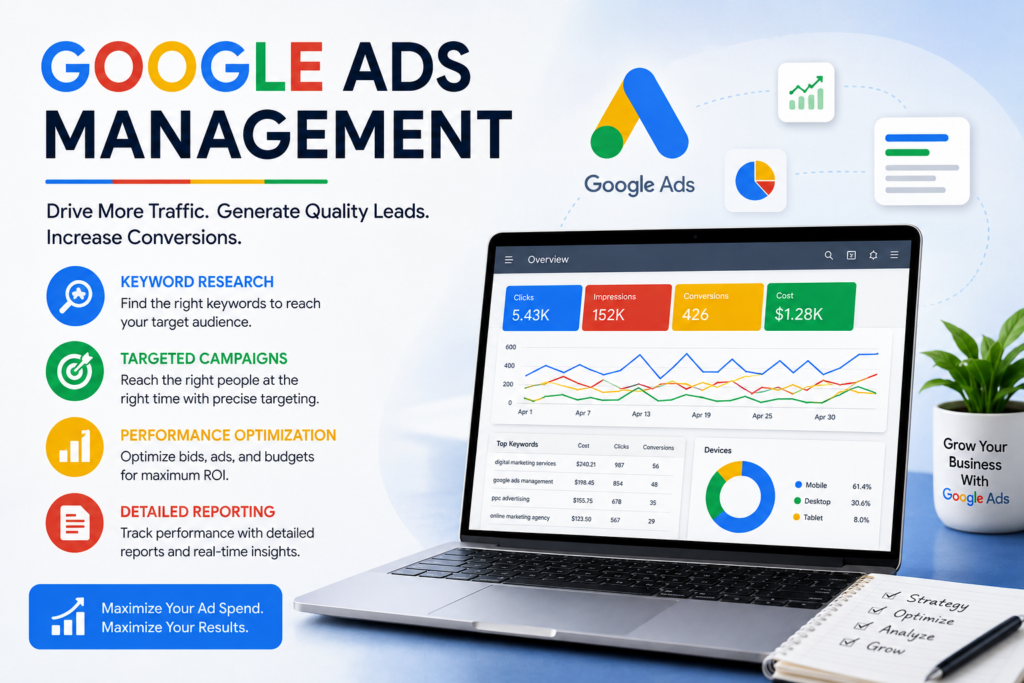
Google Ads Management Dashboard for PPC Campaign Optimization
Uncategorized

Google Ads Management

Google Ads Management involves planning, launching, monitoring, and optimizing pay-per-click (PPC) advertising campaigns using Google Ads. The goal is to reach the right audience at the right time while keeping advertising costs under control. Professional Google Ads management includes: Keyword research Campaign setup Audience targeting Ad copy creation Budget management Bid strategy optimization Conversion tracking Performance reporting Ongoing campaign optimization When managed effectively, Google Ads can deliver instant visibility on Google Search, YouTube, Gmail, Google Maps, and millions of partner websites. Why is Google Ads Important for Businesses? Businesses use Google Ads because it delivers quick and measurable results. Benefits of Google Ads Reach customers actively searching for your products or services. Generate qualified leads. Increase website traffic. Improve online sales. Control daily advertising budgets. Target specific locations, devices, and audiences. Measure campaign performance in real time. Unlike organic SEO, Google Ads allows businesses to appear at the top of search results immediately. Types of Google Ads Campaigns 1. Search Campaigns Search Ads appear at the top of Google search results when users search for relevant keywords. Best for: Lead generation Service businesses Local businesses Online inquiries 2. Display Campaigns Display Ads appear on websites within Google’s Display Network using images and banners. Ideal for: Brand awareness Remarketing Product promotion 3. Shopping Campaigns Shopping Ads showcase products with images, prices, and store information. Suitable for: E-commerce businesses Retail stores Online shopping websites 4. Video Campaigns Video Ads appear on YouTube and partner websites. Best for: Brand awareness Product launches Customer engagement 5. Performance Max Campaigns Performance Max uses automation and machine learning to display ads across all Google platforms. It helps maximize conversions while reducing manual campaign management. 6. Demand Gen Campaigns Demand Gen campaigns help businesses reach potential customers across YouTube, Discover, and Gmail with visually engaging ads designed to drive demand before users actively search. Steps in Google Ads Management 1. Define Campaign Goals Every successful campaign begins with clear objectives. Examples include: Generate leads Increase website traffic Drive online sales Increase phone calls Promote brand awareness 2. Perform Keyword Research Keyword research identifies the search terms potential customers use. Example keywords: Google Ads Management PPC Management Services Google Ads Expert Google Ads Agency Paid Search Advertising Use keyword research tools to find high-volume and low-competition keywords. 3. Create Effective Ad Copy A compelling advertisement includes: Attention-grabbing headlines Clear descriptions Strong call-to-action (CTA) Example: Headline: Professional Google Ads Management Services Description: Increase leads, improve ROI, and grow your business with expert Google Ads management. 4. Select the Right Audience Google Ads allows targeting based on: Location Age Gender Interests Device Language Search behavior Proper targeting reduces wasted advertising spend. 5. Set a Budget Google Ads provides flexible budgeting. You can choose: Daily budget Monthly budget Maximum CPC Target CPA Target ROAS Even small businesses can achieve excellent results with proper budget management. 6. Optimize Landing Pages Sending visitors to a well-designed landing page improves conversion rates. A good landing page should include: Clear headline Benefits Contact form CTA button Fast loading speed Mobile-friendly design 7. Track Conversions Conversion tracking helps measure: Form submissions Phone calls Purchases Downloads Sign-ups Without tracking, it’s difficult to evaluate campaign success. Best Practices for Google Ads Management To achieve the best performance: Use relevant keywords. Add negative keywords to reduce irrelevant clicks. Write compelling ad copy. Improve Quality Score. Optimize landing pages. Monitor click-through rate (CTR). Test multiple ad variations. Adjust bids based on performance. Review search terms regularly. Analyze conversion data. Continuous optimization helps lower costs and improve campaign performance. Common Google Ads Mistakes Avoid these common errors: Choosing broad keywords only Ignoring negative keywords Not tracking conversions Sending traffic to poor landing pages Using weak ad copy Ignoring mobile users Setting unrealistic budgets Not reviewing campaign reports Regular monitoring helps prevent wasted advertising spend. Key Metrics to Monitor Successful Google Ads management involves tracking important performance indicators such as: Impressions Clicks Click-Through Rate (CTR) Cost Per Click (CPC) Conversion Rate Cost Per Conversion Return on Ad Spend (ROAS) Quality Score Impression Share Analyzing these metrics helps improve campaign performance over time. Why Choose Professional Google Ads Management? Managing Google Ads requires expertise, ongoing optimization, and strategic decision-making. Hiring a professional can help you: Save time Reduce advertising costs Improve campaign performance Increase lead quality Maximize return on investment Stay updated with Google Ads best practices Professional management ensures your campaigns remain competitive and aligned with your business goals. Conclusion Google Ads Management is one of the most effective ways to attract targeted customers, generate leads, and grow your business online. By focusing on keyword research, audience targeting, compelling ad copy, budget optimization, and continuous performance monitoring, businesses can achieve sustainable growth and maximize their advertising investment. Whether you’re launching your first campaign or looking to improve existing ones, effective Google Ads management can help you reach the right audience, increase conversions, and achieve measurable business success.
Paid Social Media Advertising
Paid Social Media

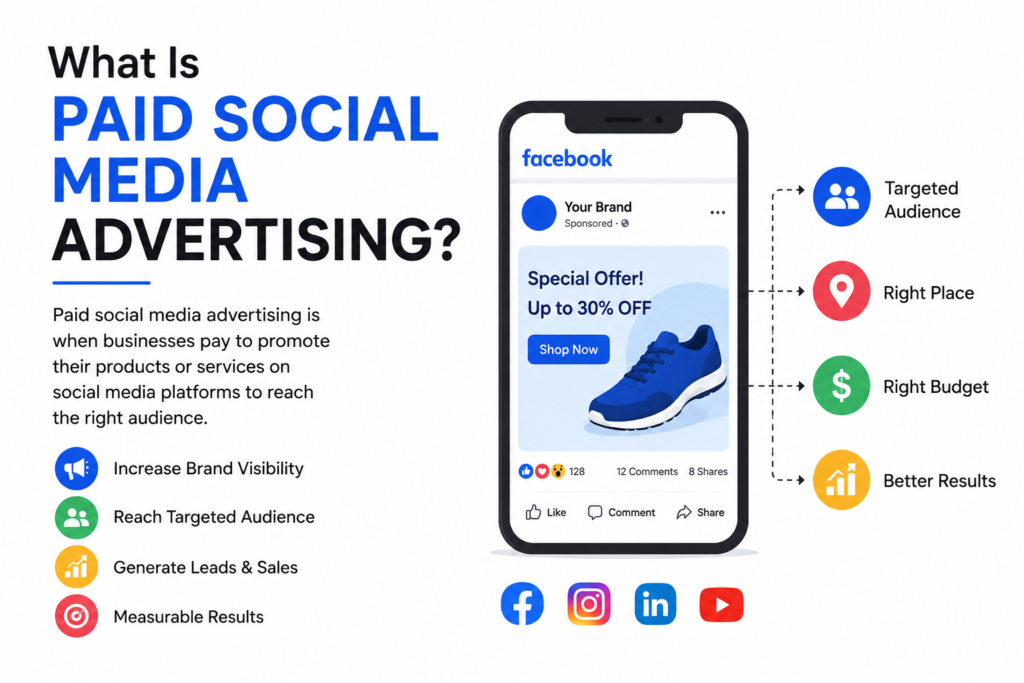
What Is Paid Social Media Advertising?

Paid social media advertising involves promoting your products, services, or content through sponsored ads on social media platforms. Unlike organic posts, paid ads allow businesses to target specific audiences based on demographics, interests, behaviors, locations, and online activities. These advertisements appear in users’ feeds, stories, videos, and other placements, helping businesses reach potential customers beyond their existing followers. Why Is Paid Advertising Important? Social media algorithms often limit the organic reach of business content. Paid advertising helps overcome these limitations by placing your message directly in front of your target audience. Some key benefits include: Increased brand visibility Faster lead generation Improved website traffic Better audience targeting Higher conversion rates Measurable marketing results Enhanced customer engagement Popular Social Media Advertising Platforms Facebook Ads Facebook remains one of the most popular advertising platforms due to its extensive targeting capabilities. Businesses can create campaigns focused on brand awareness, traffic, lead generation, app installs, and sales. Instagram Ads Instagram is ideal for visually appealing products and services. Businesses can use image ads, video ads, carousel ads, reels, and story ads to engage potential customers. LinkedIn Ads LinkedIn advertising works best for B2B companies looking to reach professionals, decision-makers, and business owners. It is particularly effective for lead generation and professional networking. X (Twitter) Ads X Ads help businesses promote tweets, trends, and accounts to increase visibility and engagement among targeted audiences. YouTube Ads Video advertising on YouTube enables brands to reach users through engaging video content before, during, or after video playback. How Targeted Advertising Works One of the biggest advantages of paid advertising is advanced audience targeting. Businesses can target users based on: Demographics Age Gender Education Occupation Income level Geographic Location Businesses can display ads to people in specific cities, states, or countries, making local advertising highly effective. Interests and Behaviors Platforms collect data about user interests, hobbies, and online activities, allowing advertisers to reach highly relevant audiences. Custom Audiences Businesses can upload customer lists, target website visitors, or create audiences based on previous interactions. Lookalike Audiences Advertisers can find new users who share similar characteristics with their existing customers. Types of Social Media Ads Image Ads Simple yet effective ads featuring high-quality visuals and compelling copy. Video Ads Video content often generates higher engagement and can effectively showcase products or services. Carousel Ads These ads allow businesses to display multiple images or products within a single advertisement. Story Ads Full-screen vertical ads that appear between user stories on platforms like Instagram and Facebook. Lead Generation Ads Designed specifically to collect customer information directly through the platform. Best Practices for Successful Social Media Advertising Define Clear Goals Determine whether your objective is brand awareness, traffic, lead generation, or sales before launching a campaign. Know Your Audience Research your target audience thoroughly to create highly relevant ads. Use High-Quality Visuals Professional images and videos can significantly improve ad performance. Write Compelling Ad Copy Focus on the customer’s needs and include a strong call-to-action (CTA). Monitor and Optimize Track campaign performance regularly and make adjustments to improve results. A/B Test Ads Test different headlines, images, audiences, and CTAs to identify what performs best. Measuring Advertising Success Businesses should monitor key performance indicators (KPIs), including: Reach Impressions Click-Through Rate (CTR) Cost Per Click (CPC) Conversion Rate Return on Ad Spend (ROAS) Lead Generation Metrics These metrics help evaluate campaign effectiveness and guide future optimization efforts.

Paid Social media advertising
SEO Services

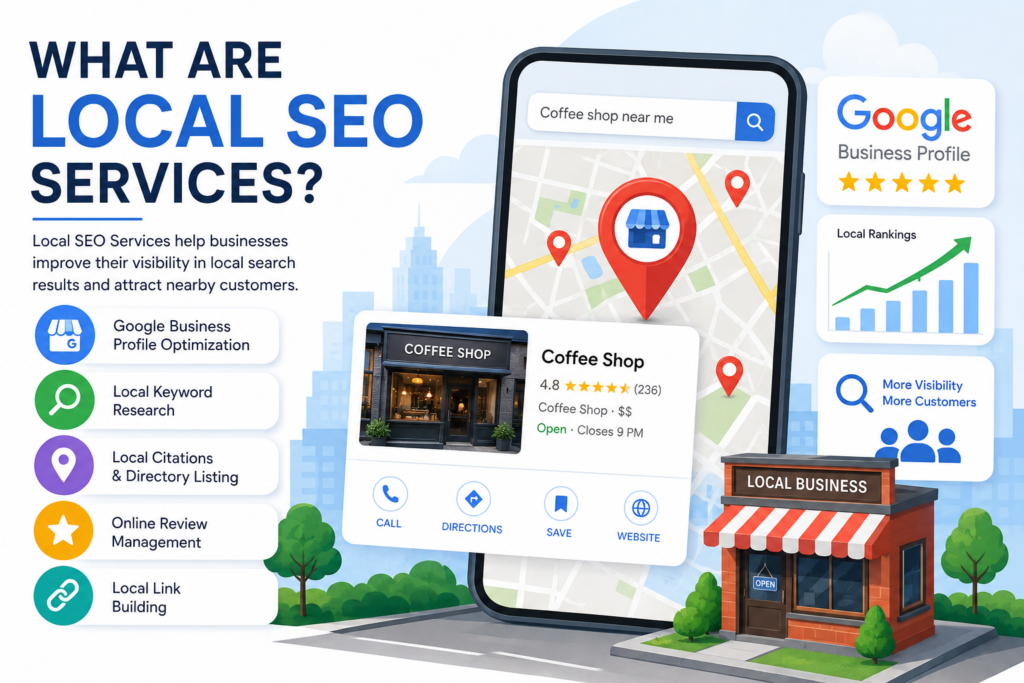
What Are Local SEO Services?

In today’s digital world, customers often search online before visiting a store, booking a service, or making a purchase. If your business serves a specific geographic area, Local SEO can help you reach nearby customers who are actively looking for your products or services. Whether you own a restaurant, healthcare clinic, salon, retail store, or service-based business, Local SEO Services can significantly improve your online visibility and drive more local customers to your business. What Is Local SEO? Local SEO (Search Engine Optimization) is the process of optimizing your online presence to appear in local search results. These are searches that include location-based keywords such as: “Digital marketing agency near me” “Best dentist in Hyderabad” “Local SEO services in Bangalore” “Coffee shop near me” Local SEO helps businesses rank higher in search engines like Google when people search for products or services in their area. What Are Local SEO Services? Local SEO Services are professional strategies and techniques used to improve a business’s visibility in local search results. These services help businesses attract nearby customers, increase website traffic, generate leads, and improve sales. A local SEO expert focuses on optimizing various online elements to ensure your business appears in Google Search, Google Maps, and local business directories. Why Are Local SEO Services Important? 1. Increase Local Visibility Most customers use Google to find local businesses. Local SEO ensures your business appears when potential customers search for services you offer. 2. Drive More Qualified Traffic People searching for local businesses usually have strong purchase intent. Local SEO helps attract visitors who are ready to take action. 3. Improve Google Maps Rankings Appearing in Google Maps can bring significant traffic and inquiries. Local SEO helps improve your position in map results. 4. Build Trust and Credibility Positive reviews, accurate business information, and optimized profiles increase customer trust and confidence. 5. Generate More Leads and Sales By targeting customers in your service area, Local SEO helps convert searches into phone calls, inquiries, and purchases. Key Local SEO Services Google Business Profile Optimization A Google Business Profile is one of the most important elements of Local SEO. Optimization includes: Updating business information Adding photos and videos Selecting the correct business category Managing customer reviews Posting regular updates Local Keyword Research SEO professionals identify keywords that local customers use when searching for products or services. Examples: Local SEO services Hyderabad Best digital marketing consultant near me Affordable SEO services in Bangalore On-Page SEO Optimization This involves optimizing website pages with local keywords, including: Title tags Meta descriptions Header tags Content optimization Internal linking Location-specific landing pages Local Citation Building Citations are online mentions of your business name, address, and phone number (NAP). Consistent citations across directories help improve local rankings. Online Review Management Customer reviews play a major role in Local SEO. Services often include: Encouraging customer reviews Monitoring review platforms Responding to reviews professionally Managing reputation Local Link Building Acquiring backlinks from local websites, organizations, blogs, and directories improves authority and local search rankings. Mobile Optimization Most local searches happen on smartphones. Local SEO ensures your website: Loads quickly Is mobile-friendly Provides a great user experience Benefits of Local SEO Services Businesses investing in Local SEO can experience: Higher Google rankings Increased website traffic More phone calls and inquiries Better online reputation Greater brand awareness Higher conversion rates Improved customer trust Who Needs Local SEO Services? Local SEO is ideal for: Healthcare clinics Dental practices Restaurants and cafes Salons and spas Real estate agencies Retail stores Educational institutions Digital marketing agencies Home service providers Local consultants If your business serves customers within a specific city, town, or region, Local SEO can help you reach the right audience. How Long Does Local SEO Take? Local SEO is a long-term strategy. While some improvements may be visible within a few weeks, significant results typically take 3 to 6 months depending on competition, website authority, and optimization efforts. Consistency is the key to achieving sustainable local search success. Conclusion Local SEO Services help businesses connect with nearby customers at the exact moment they are searching for products or services. From optimizing your Google Business Profile to improving local rankings and managing online reviews, Local SEO plays a critical role in business growth. As local searches continue to increase, investing in Local SEO is no longer optional—it’s essential for businesses that want to stay competitive and attract more customers. By implementing the right Local SEO strategies, you can improve visibility, generate qualified leads, and grow your business in your local market.

Showcase Image for SEO
SEO

Local SEO Services for Small Business: Complete Guide to Get More Customers in 2026

Introduction In today’s competitive digital landscape, small businesses need more than just a website to attract customers. When people search for products or services near them, they usually choose businesses that appear at the top of local search results. This is where Local SEO Services for Small Business become essential. Local SEO helps businesses improve their visibility in location-based searches, attract nearby customers, and increase revenue. Whether you own a retail store, restaurant, clinic, salon, or service-based business, a strong local SEO strategy can help you stand out from competitors and connect with potential customers in your area. What Are Local SEO Services? Local SEO (Search Engine Optimization) is the process of optimizing your online presence to rank higher in local search results. It focuses on helping businesses appear when customers search for services within a specific location. For example, when someone searches for: “Digital marketing services near me” “Best SEO agency in Bangalore” “Coffee shop near me” Google displays local businesses that are most relevant to the search query and location. Why Local SEO Matters for Small Businesses More consumers rely on Google to find local businesses than ever before. If your business doesn’t appear in local search results, you could be missing valuable opportunities. Benefits of local SEO include: Increased local visibility Higher website traffic More qualified leads Better customer trust Increased phone calls and inquiries Higher conversion rates Local SEO allows small businesses to compete effectively with larger brands by targeting customers in their service areas. Key Benefits of Local SEO Services 1. Improved Local Search Rankings A well-optimized website and business profile help you appear higher in local search results and Google Maps. 2. Increased Website Traffic When your business ranks higher for local keywords, more people visit your website and learn about your services. 3. Better Customer Trust Businesses with complete profiles, positive reviews, and accurate information appear more trustworthy to customers. 4. Higher Conversion Rates Local searches often indicate strong buying intent. Customers searching for local services are usually ready to make a purchase or contact a business. Essential Local SEO Strategies for 2026 Optimize Your Google Business Profile Your Google Business Profile is one of the most important factors in local SEO. Make sure your profile includes: Accurate business name Address and phone number Business hours Website URL Service descriptions High-quality photos Regular updates help improve visibility and engagement. Target Local Keywords Use keywords that include your location and services. Examples: SEO services in Bangalore Digital marketing consultant in Hyderabad Local SEO services for small business Include these keywords naturally in: Page titles Meta descriptions Headings Website content Build Local Citations Ensure your business information is consistent across online directories, including: Google Business Profile Bing Places Local business directories Industry-specific directories Consistency helps search engines trust your business information. Generate Customer Reviews Positive reviews improve credibility and local rankings. Encourage satisfied customers to leave reviews and always respond professionally to feedback. Create Local Content Publishing location-specific content helps attract local audiences. Examples: Local business success stories Industry updates in your city Community events and activities Local SEO tips

media
Media Digital Marketing

How to Start Digital Marketing?

Digital marketing has become one of the most effective ways for businesses to promote their products and services online. With millions of people using the internet every day, digital marketing helps businesses reach their target audience, build brand awareness, and increase sales. If you are new to this field, learning how to start digital marketing can open many opportunities for business growth and career development. What is Digital Marketing? Digital marketing is the process of promoting products or services using digital channels such as websites, search engines, social media platforms, email, and mobile applications. It allows businesses to connect with customers online and measure their marketing performance effectively. Steps to Start Digital Marketing 1. Learn the Basics of Digital Marketing Before starting, it is important to understand the core concepts of digital marketing. This includes learning about SEO, social media marketing, content marketing, email marketing, and online advertising. There are many online courses, blogs, and tutorials that can help beginners understand these concepts. 2. Create a Website A professional website acts as the foundation of your digital marketing strategy. It represents your brand online and allows customers to learn more about your products or services. Your website should be easy to navigate, mobile-friendly, and optimized for search engines. 3. Understand Your Target Audience Knowing your audience is essential for successful digital marketing. Identify who your customers are, what they need, and where they spend time online. Understanding your audience helps you create content and marketing campaigns that attract the right people. 4. Start Using Social Media Platforms Social media platforms like Facebook, Instagram, LinkedIn, and Twitter are powerful tools for marketing. Businesses can share content, interact with customers, and promote products through these platforms. Posting regularly and engaging with followers helps build brand trust and visibility. 5. Focus on Search Engine Optimization (SEO) SEO helps your website appear in search engine results when people search for related topics. By using the right keywords, creating quality content, and optimizing your website, you can increase your chances of ranking higher on search engines. Higher rankings bring more organic traffic to your website. 6. Create Valuable Content Content marketing plays a major role in digital marketing success. Creating blogs, videos, infographics, and guides helps educate your audience and build credibility. Quality content attracts visitors and encourages them to stay longer on your website. 7. Use Email Marketing Email marketing helps businesses communicate directly with customers. Sending newsletters, promotional offers, and updates can help maintain relationships with your audience. It is one of the most effective ways to convert leads into loyal customers. 8. Analyze and Improve Your Strategy Digital marketing allows you to track performance using analytics tools. Monitoring metrics such as website traffic, engagement, and conversions helps you understand what works and what needs improvement. Regular analysis helps you improve your marketing strategy over time. Benefits of Digital Marketing Starting digital marketing offers many advantages, including: These benefits help businesses grow faster in the digital world. Conclusion Digital marketing is a powerful tool that helps businesses reach their target audience and grow online. By learning the basics, creating a strong online presence, and using effective marketing strategies, anyone can start digital marketing successfully. Whether you are a business owner or someone interested in building a career in marketing, digital marketing offers endless opportunities. At Growwithgayathri, we aim to help businesses grow their online presence with effective digital marketing strategies.

images Social Media Marketing
Social Media

What is Social Media Marketing?

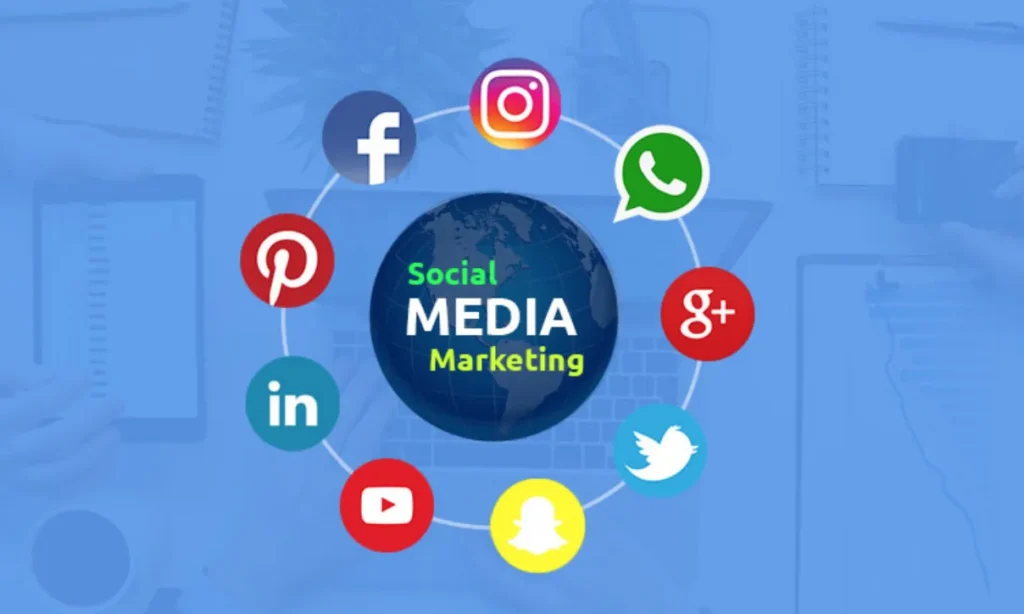
Social Media Marketing (SMM) is the process of using social media platforms to promote a business, product, or service. It involves creating and sharing content on platforms like Facebook, Instagram, LinkedIn, Twitter, and YouTube to reach and engage with potential customers. Businesses use social media marketing to build brand awareness, connect with their audience, increase website traffic, and generate sales. Key Activities in Social Media Marketing 1. Content CreationCreating engaging posts such as images, videos, reels, stories, and infographics that attract and inform the audience. 2. Audience EngagementInteracting with followers by replying to comments, messages, and participating in discussions. 3. Paid AdvertisingRunning targeted ads on social media platforms to reach specific audiences based on location, interests, and demographics. 4. Analytics and Performance TrackingAnalyzing metrics like likes, shares, reach, and conversions to understand what works best. Benefits of Social Media Marketing Example For example, a small clothing business can post product photos on Instagram, run targeted ads, and interact with customers through comments and messages to increase sales. Conclusion Social Media Marketing is a powerful digital marketing strategy that helps businesses grow their online presence, reach the right audience, and build long-term customer relationships.

image 1
Digital Marketing

What is Digital Marketing? A Complete Beginner’s Guide

Digital marketing is the practice of promoting products or services using online channels such as search engines, social media, email, and websites. It helps businesses connect with their target audience, increase brand visibility, and drive sales in a cost-effective way. This beginner’s guide explains the core concepts of digital marketing, including SEO, social media marketing, content marketing, and paid advertising, along with simple strategies to get started and grow your online presence successfully In simple terms, digital marketing is using online channels to connect with customers and grow a business. Why Digital Marketing is Important Today, most people spend a large amount of time online. They search for products on search engines, interact on social media, and read reviews before making purchasing decisions. Digital marketing helps businesses reach these customers where they already spend their time. Some key reasons why digital marketing is important include: 1. Wider ReachDigital marketing allows businesses to reach customers across the world, not just in their local area. 2. Cost-EffectiveCompared to traditional advertising methods like TV or newspaper ads, digital marketing is more affordable and accessible for small businesses. 3. Targeted AudienceBusinesses can target specific audiences based on location, interests, age, and online behavior. 4. Measurable ResultsDigital tools allow businesses to track performance, website traffic, and customer engagement. Types of Digital Marketing Digital marketing includes several strategies that help businesses grow online. 1. Search Engine Optimization (SEO) SEO is the process of improving a website so it ranks higher on search engines. When your website appears on the first page of search results, more people can find your business. 2. Social Media Marketing This involves promoting products or services on platforms like Facebook, Instagram, LinkedIn, and Twitter. Social media helps businesses build brand awareness and interact with customers. 3. Content Marketing Content marketing focuses on creating valuable content such as blog posts, videos, infographics, and guides to attract and educate customers. 4. Email Marketing Email marketing involves sending emails to customers to promote products, share updates, and maintain relationships. 5. Pay-Per-Click Advertising (PPC) PPC is a paid advertising model where businesses pay each time someone clicks on their advertisement. These ads usually appear on search engines or social media platforms. Benefits of Digital Marketing Digital marketing offers several benefits for businesses: These benefits make digital marketing one of the most powerful tools for business growth. How to Start Digital Marketing If you are new to digital marketing, here are some simple steps to begin: Consistency and strategic planning are essential for success in digital marketing. Conclusion Digital marketing has transformed the way businesses promote their products and connect with customers. By using strategies like SEO, social media marketing, and content marketing, businesses can reach a wider audience and achieve long-term growth. Whether you are a small business owner or an aspiring marketer, learning digital marketing can open many opportunities in today’s digital world.

Scroll to Top